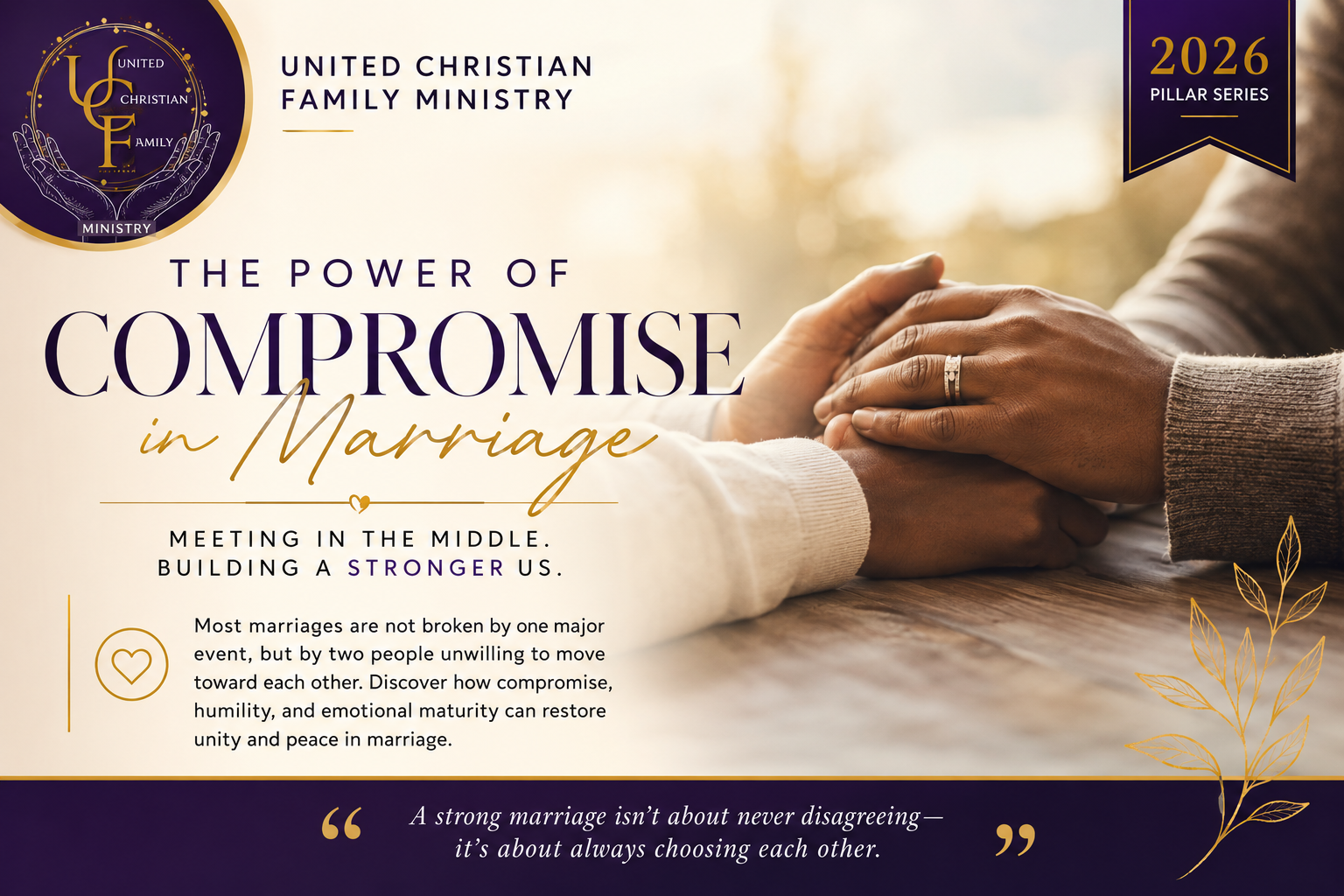
COMPROMISE
For years, I struggled with the inability to compromise in different areas of our marriage. What I did not realize at the time was how destructive rigidity can become when left unchecked. An unwillingness to bend can quietly spread into every area of a relationship. It creates distance, tension, emotional walls, and eventually division.
I was strong-minded and deeply rooted in my beliefs. Once I took a position, I held onto it tightly. In my mind, right was right and wrong was wrong. There was no middle ground. I viewed situations through a very fixed lens, and because of that, compromise often felt unnecessary — especially if I believed I was correct.
But marriage does not thrive in extremes.
While I stood firmly in my position, my husband often approached conflict differently. He would remain calm, search for common ground, and try to resolve issues with grace and perspective. Meanwhile, I often led with resistance before even allowing room for conversation. Looking back now, I can honestly admit that some of my earlier positions were more about control, fear, and pride than wisdom.
What I eventually learned is this: most disagreements were not about wanting different outcomes. We simply had different approaches. One of us processed from the top down, while the other worked from the bottom up. Different perspectives. Different styles. Different starting points. Yet our ultimate desire was often the same.
The breakthrough came when we both began moving toward the middle.
That middle ground is where healing happens.
That middle ground is where understanding grows.
That middle ground is where joy returns.
Compromise does not mean losing yourself. It means making space for someone else’s perspective while still honoring your own. It requires maturity, humility, emotional intelligence, and love.
Once I held my grounds, nothing anyone said could’ve convince me otherwise. White was white and black was black!
-
- Compromise requires sacrifice.
Sometimes you must lay down pride, emotions, or the need to “win” for the sake of unity. - Emotional maturity matters.
Can you pause long enough to truly hear your spouse before reacting? - Fear and doubt must be confronted.
Many times, resistance is rooted in fear — fear of losing control, being misunderstood, or not being valued. - The goal is not victory over your spouse.
The goal is partnership, peace, and forward movement together.
The next time you find yourself at a difficult crossroads in your marriage, take a moment to ask yourself:
Am I protecting my position, or am I protecting my relationship?Join us this year for a deeper conversation on this important pillar of marriage. Be sure to sign up for our monthly emails to stay informed about upcoming seminars and discussions.
- Compromise requires sacrifice.